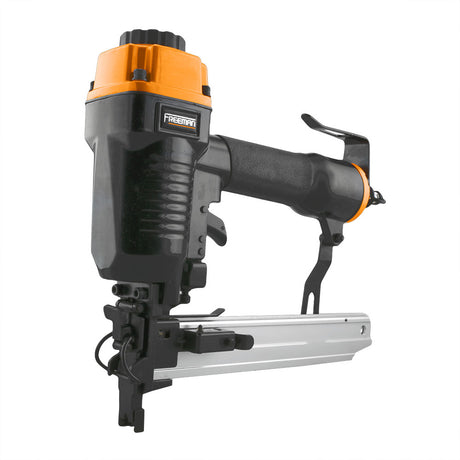

Pneumatic nailers and staplers operate under intense mechanical stress, cycling thousands of high-velocity piston impacts each workday. Without a deliberate care routine, friction and environmental contamination rapidly degrade internal components, leading to sluggish cycling, costly downtime, and incomplete drives.
Preserving Driving Power
A nailer’s driving force relies entirely on a sealed, low-friction pneumatic chamber. When internal components lose lubrication or become fouled with dust, the piston cannot achieve full velocity, resulting in fasteners sitting proud and requiring manual hammering. Maintaining proper lubrication and consistent air pressure ensures maximum kinetic energy transfer on every trigger pull, leaving fasteners countersunk precisely to depth across hardwoods, subfloors, and framing lumber.
Preventing Premature Wear & Mechanical Failure The internal piston, driver blade, and cylinder wall are precision-machined parts separated by dynamic rubber O-rings. Routine upkeep directly mitigates the primary causes of premature tool failure:
-
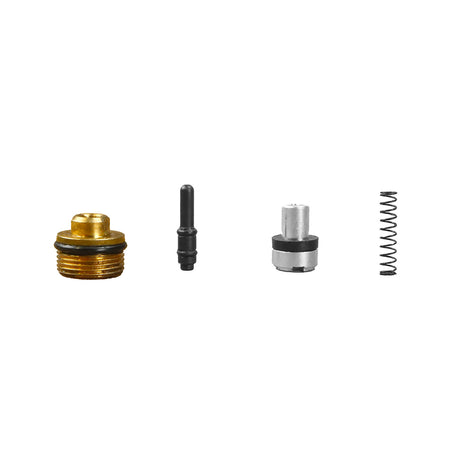
O-Ring Degradation: Dry-firing or running unlubricated tools causes friction heat that cracks and shrinks rubber O-rings, leading to continuous internal air leaks.
-
Cylinder Scoring: Sawdust, drywall grit, and moisture entering the intake act as an abrasive slurry against the cylinder wall, permanently ruining the airtight seal.
-
Driver Blade Fractures: Misaligned feeds or grit buildup in the magazine force the driver blade to strike fasteners off-center, leading to chipped or warped driver tips.
Implementing simple preventative habits before the first shot and after the final cycle protects the tool's internal tolerances, extends the service life of internal seals, and eliminates unexpected jobsite delays.
Pro Maintenance Routine for Pneumatic Tools

1. Pre-Shift Lubrication (3–5 Drops Daily): Never use standard motor oil, WD-40, or vegetable oils.
Disconnect the air line and invert the tool. Place 3 to 5 drops of non-detergent pneumatic tool oil directly into the male air inlet fitting. Connect the hose and dry-fire 1–2 times into scrap wood to disperse lubricant across internal O-rings and the cylinder wall without staining trim.

2. Purge Moisture from the Compressor Daily: The #1 cause of internal cylinder rust and seal failure.
Compressing ambient air generates condensation inside the tank. Open the petcock/drain valve at the base of the air compressor tank at the end of every work session. Pair your line with an in-line moisture trap/filter to prevent water vapor from entering the tool cylinder.

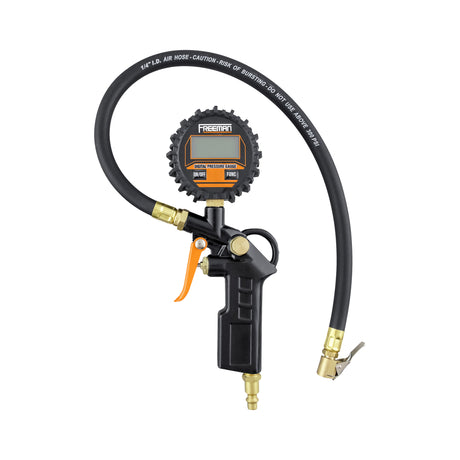
3. Regulate Working PSI Strictly to Spec: Over-pressuring blows internal seals; under-pressuring causes proud nails.
Match air regulator pressure to the specific tool task:
-
Finishing / Brad / Pin Nailers: 70–100 PSI
-
Framing / Heavy-Duty Nailers: 80–115 PSI
Adjust fastener sink depth using the tool-free depth adjustment wheel on the nose rather than cranking compressor line pressure beyond rating.

4. End-of-Day Cleaning and Storage: Prevents grit from scoring the magazine track.
Wipe down the magazine rail and driver guide with a clean microfiber towel. Blow away sawdust and drywall particulates using an air blow gun before storing the tool in a dry canvas case or hard case.
Jobsite Troubleshooting Checklist
-
Nail Heads Sitting Proud: Check line regulator PSI first; dial the nose wheel down to increase drive depth. Ensure hose length does not exceed 50 ft from the tank without an increase in hose diameter to prevent pressure drop.
-
Driver Jamming: Disconnect air supply immediately. Open the tool-free quick-clear nose latch, extract bent fasteners, and inspect the driver blade for alignment.
-
Sluggish Firing / Air Leaks: Re-apply 4–5 drops of air tool oil to reseat dried internal O-rings. Check the male quick-connect fitting threads for tight Teflon seal tape.
Top Versatile Jobsite Nailers & Combo Loadouts
|
Model / Kit |
Category |
Key Jobsite Applications |
Highlight Features |
|
|
16GA Finish, 18GA Brad, 18GA Narrow Crown Stapler, 23GA Micro Pinner |
Baseboards, door/window casings, cabinetry, crown moulding, and crafts |
Complete finish coverage, anodized aluminum cylinders, tool-free depth adjust |
|
|
Full-Head Framing (2″ to 3-1/2″) |
Wall framing, roof trusses, subfloors, deck building, and fencing |
Magnesium body, 360° directional exhaust, anti-dry fire lockout |
|
|
1/4″ Narrow Crown (1/2″ to 1-5/8″) |
Cabinet backing, soffits, lattice work, subflooring underlayment |
Dual-mode trigger (bump or sequential), no-mar safety tip |
|
|
16-Gauge and 18-Gauge 2" Flooring Nailer |
Tongue-and-groove hardwood, engineered flooring installation |
Interchangeable base plates for varying floorboard thicknesses |