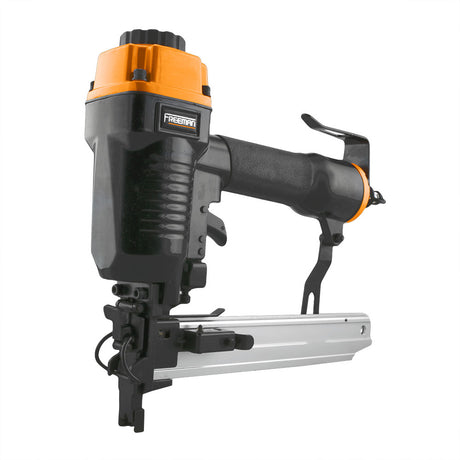

You connect the air hose, set your regulator to 90 PSI, press the nosepiece firmly against your workpiece, and pull the trigger. Instead of driving a fastener, you get an empty puff of exhaust air.
When a pneumatic nailer cycles air without sinking a nail, the issue is almost never total tool failure. It typically boils down to one of four common mechanical culprits: an engaged dry-fire lockout, an internal air leak, a stuck magazine pusher, or a blown piston O-ring.
Use this diagnostic guide to pinpoint why your nail gun is dry-cycling and get back to work fast.
Quick Diagnostic: At-a-Glance Troubleshooting
| Symptom | Primary Cause | Immediate Fix |
| Driver doesn’t cycle; 3–5 nails remain in the magazine | Dry-Fire Lockout | Reload a fresh strip of collated nails. |
| Pusher stays back; nails don’t advance forward | Jammed Pusher / Dirt in Channel | Clean the magazine track, wipe debris, check spring tension. |
| Air continually hisses from exhaust or trigger | Valve Leaks / Low Line PSI | Check compressor output, replace trigger valve O-rings. |
| Full air blast cycles, but the driver blade never strikes | Severed Driver Piston O-Ring | Disassemble top cap, replace worn cylinder/piston O-rings. |
| Driver strikes halfway down and stays extended | Piston Seized / Lack of Oil | Add 4–5 drops of pneumatic oil directly into the air inlet. |

1. The Dry-Fire Lockout Mechanism Is Engaged
Most modern professional pneumatic nailers—including Freeman framing, siding, and finish nailers—are engineered with a dry-fire lockout.
-
How It Works: When the nail strip drops down to the last 3 to 5 fasteners, the magazine pusher engages a physical stop mechanism. This blocks the safety contact element (the nose safety) from depressing fully.
-
Why the Gun Shoots Air: If the safety is partially engaged or the trigger valve cycles without the driver blade descending, the tool discharges exhaust air while preventing the driver from striking empty air or soft wood.
-
The Fix: Pull the magazine pusher back, insert a full stick of collated fasteners, and release the pusher so it rests flush against the rear nail. Never force the contact foot against lumber when the magazine is near empty.
2. A Jammed Pusher or Corrupted Magazine Track
If you have plenty of nails loaded but the gun only fires air, the fasteners are likely failing to advance into the drive chamber.
-
Debris & Resin Buildup: Jobsite dust, drywall powder, and collation glue shards frequently accumulate inside the magazine channels. This friction stops the pusher follower before it pushes the lead nail under the driver blade.
-
Damaged Pusher Spring: Over time, the spiral spring or coil band that drives the pusher can lose tension or bind inside its housing.
-
Collation Size Mismatch: Using collated nails with the incorrect collation angle (e.g., loading 28° wire-collated nails into a 21° plastic-collated framing nailer) will cause nails to pinch inside the channel.
-
The Fix:
-
Disconnect the air line.
-
Depress the magazine latch and remove the nail strip.
-
Inspect the nail track for fragments of plastic collation, broken wire tape, or bent fasteners.
-
Blow out the magazine with an air nozzle and wipe the tracks with a dry rag. Avoid heavy grease inside the magazine, as it attracts dust.
-
3. Severed, Rolled, or Dried-Out O-Rings
If the driver piston inside the cylinder cannot maintain a dynamic seal, air pressure escapes past the piston rather than driving it downward.
-
The Piston O-Ring: The piston head relies on a heavy-duty synthetic rubber O-ring to form an airtight seal against the cylinder wall. When you pull the trigger, pressurized air fills the cylinder chamber above the piston, propelling the driver blade down.
-
Signs of a Compromised O-Ring:
-
The tool lets out a full exhaust burst, but the driver blade barely taps the nail or doesn't move at all.
-
You hear air rushing straight past the piston into the lower cylinder assembly.
-
Tiny black rubber specks blow out through the exhaust deflector.
-
-
The Fix:
-
Disconnect air and remove the hex bolts on the top cylinder cap.
-
Inspect the main piston head O-ring and the cylinder seal collar. Look for flat spots, cracks, or severe tearing.
-
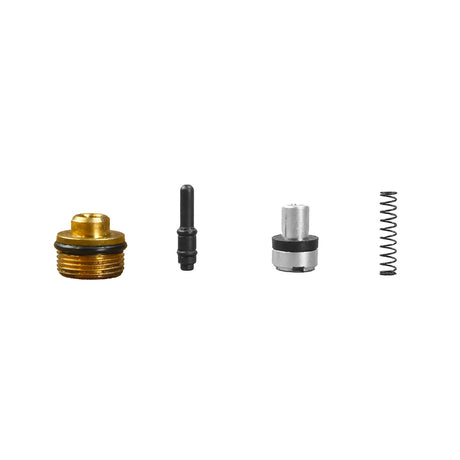
Clean the cylinder bore and install a fresh O-ring using a standard nailer rebuild kit.
-
Coat the new O-ring generously with pneumatic tool oil before reassembling.
-
4. Insufficient Operating PSI or Internal Air Leaks
Pneumatic nailers operate within a tight pressure threshold—typically 70 to 115 PSI depending on the gauge and application.
-
Inadequate Working Pressure: If your compressor regulator is set to 90 PSI at the tank, but you are running a 100-foot, 1/4-inch air hose, pressure drop can starve the nailer of the volumetric air needed to throw the driver piston. The valve vents air, but the piston lacks the force to complete a stroke.
-
Trigger Valve Leak: A worn trigger valve O-ring allows air to bypass the actuation valve. You will notice a continuous hiss near the trigger assembly when the hose is connected.
-
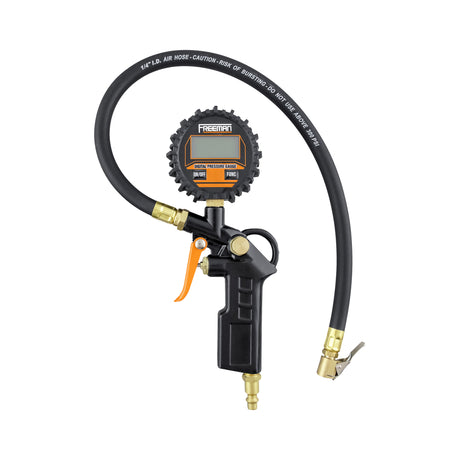
The Fix: Verify your compressor’s regulated working pressure directly at the tool end of the hose. Check that your line is free of severe moisture buildup, and replace dried trigger seals if air escapes around the trigger housing.
Preventive Maintenance: How to Stop Dry-Cycles Before They Start
-
Lubricate Daily: Place 4 to 6 drops of non-detergent pneumatic tool oil into the male air inlet before every shift. Detergent motor oils and WD-40 destroy rubber O-rings and swell inner seals.
-
Drain the Compressor Tank Daily: Moisture in pneumatic lines causes internal oxidation, washes away factory lubrication, and degrades O-rings.
-
Match Fastener Specs Exactly: Check your nailer’s spec plate for fastener diameter, gauge, and collation angle. A 16-gauge straight finish nail will not cycle reliably in an 18-gauge brad nailer channel.