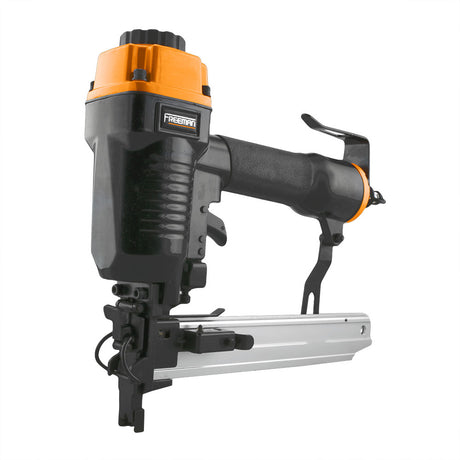

Yes, you can use a nail gun in cold weather. But if you've ever had a framing nailer go weak at 7 a.m. on a frosty deck, you know cold air changes how your tools work.
The good news is that most cold-weather problems with nail guns come from three things: water in your air line, stiff seals and oil, and cold batteries. All three are easy to fix once you know what to look for.
Here are answers to the most common nail gun cold weather questions we hear from contractors and DIYers, plus a quick routine to keep your tools firing all winter.
Why Does My Nail Gun Misfire When It's Cold?
Your compressor pulls in moist air. When that air is squeezed and then cools in the tank and hose, the moisture turns into water. Below 32°F, that water can freeze in your hose, your fittings, or inside the tool itself.
Firing a nailer makes things worse. Air cools as it expands, so every shot chills the inside of the tool a little more. If water reaches the piston or trigger valve, it can freeze there.
Common cold-weather symptoms
| What you notice | Most likely cause | Quick fix |
|---|---|---|
| Nails standing proud | Ice or water slowing the piston, or thick oil | Drain the tank, warm the tool, re-oil |
| Tool fires air but no nail | Frozen moisture or stiff O-rings | Bring the tool inside to warm up, then test on scrap |
| Stiff or sticky trigger | Ice in the trigger valve | Warm the tool; don't force the trigger |
| Frost at the exhaust port | Moisture in the air supply | Drain the tank and add a water separator |
| Slow or weak firing on a cordless nailer | Cold battery | Swap in a battery kept warm in your truck cab or pocket |
If your nailer is firing air but not driving nails, see our full guide: Why Is My Nail Gun Shooting Air but Not Firing Nails?
Should I Turn Up the PSI When My Nailer Gets Weak in the Cold?
No. This is the most common mistake we see in winter.
When nails stop sinking, it feels like the tool needs more air. But in cold weather, the problem is usually ice or water slowing the tool down, not low pressure. Cranking the regulator past your tool's rated range won't melt anything. It only adds wear to the driver blade, piston, and bumper, and it makes recoil worse.
We actually reccommend users to lower the pressure to 80 PSI or less while the tool warms up, then return to normal operating pressure.
Pro Tip: Use the lowest PSI that drives nails flush, even in winter. Our PSI guide lists the right range for every nailer type.
How Often Should I Drain My Compressor in Winter?
At least once a day, and more often when it's cold.
Water in the tank is the root of most freeze-ups. Drain your compressor at the end of every workday so water doesn't sit in the tank overnight. If the compressor stayed in a cold truck or trailer, drain it again in the morning after it fills, before you connect your tools (AIRSTAHL).
Winter compressor checklist
-
Open the drain valve at the bottom of the tank at the end of every day.
-
Let the tank fill in the morning, then drain once more before hooking up tools.
-
Add an inline water separator or filter near the tool, and empty its bowl daily.
-
Keep the compressor out of snow and off frozen ground when you can.
-
Never leave a full tank of wet air in the cold over a weekend.
Quick Fix: If your setup runs on a portable unit like the Freeman P3GCOMP Electric 3 Gallon Air Compressor, store it in a heated space overnight. It's light enough to carry in at the end of the day.
What Oil Should I Use in a Nail Gun in Cold Weather?
Use the oil your tool's manual recommends, and use it more often in winter.
Cold makes O-rings stiffer and oil thicker. That slows the piston and can cause weak drives. A few drops of oil in the air inlet at the start of the day keep seals soft and moving freely.
Some manufacturers offer a winter-formula air tool oil for use below freezing. Paslode, for example, sells a cold-weather oil that it says is only meant for temperatures below 32°F (Nail Gun Depot). Before switching oils, check your manual or contact Freeman support. Never pour automotive antifreeze or any product your manual doesn't approve into your tool or hose.
Daily winter oiling routine
-
Disconnect the air and remove all fasteners.
-
Add a few drops of Freeman 8 oz. Air Tool Oil into the air inlet.
-
Reconnect the air at a lower pressure.
-
Load nails and fire 5 or 6 times into scrap lumber to work the oil through the seals.
-
Turn pressure back up to your normal operating level.
-
Re-oil around midday, or after about 4 hours of steady use.
For a full maintenance routine, see our Freeman Masterclass: Pneumatic Tool Care Tips.
Does My Air Hose Matter in Cold Weather?
Yes, more than most people think.
Cheap PVC and rubber hoses get stiff in the cold. They kink, crack, and fight you every time you move. A cracked or porous hose also leaks air and lets in moisture.
A polyurethane hose stays flexible at low temperatures. The Freeman 1/4" x 50' Polyurethane Air Hose is rated from -30°F to 150°F, so it stays easy to coil and drag across a frozen jobsite. Its field-repairable ends also mean a damaged fitting doesn't end your day.
Hoses lying on a frozen slab or roof are at the outdoor temperature, so water can freeze inside them. Bring hoses inside overnight, and blow them out before you coil them.
Do Cordless Nailers Work in Cold Weather?
Yes. Cordless nailers skip the water and ice problems of air tools, which makes them a strong winter choice for punch lists and trim. But lithium-ion batteries have their own cold-weather rules.
-
Cold batteries run out faster. Expect fewer shots per charge when it's freezing. Keep a spare battery warm in your truck cab or jacket and rotate packs.
-
Don't charge a frozen battery. Let it warm to room temperature first. Charging lithium-ion batteries below freezing can cause permanent damage, and safety guidance says to charge them at room temperature unless the manufacturer allows otherwise (CCOHS).
-
Store batteries indoors. An unheated garage or shed is hard on packs over a long winter.
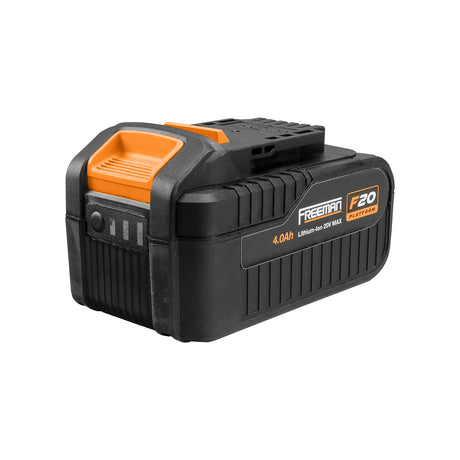
The Freeman 20V 4Ah Lithium-Ion Battery drives up to 750 fasteners per charge in normal conditions, so having two in rotation covers most cold-weather workdays.
Still deciding between air and battery? Read Cordless vs Pneumatic Nailers: Which One's Right for You?
Where Should I Store My Nail Gun in Winter?
Inside, somewhere warm and dry. This one habit prevents more winter problems than anything else.
Tools left in a cold truck overnight can collect frost on their valves and seals. Many nailer manuals warn against storing tools in a cold environment for this reason.
If you can't bring everything inside:
-
Bring in the nailers, hoses, and batteries first. They're the most sensitive.
-
Keep tools in a closed case so they don't collect condensation.
-
Let a cold tool warm up for a few minutes in the cab before you start.
-
On long days, rotate tools so idle ones stay warmer.
Your 5-Minute Winter Nail Gun Routine
Before work:
-
Let the compressor fill, then drain the tank.
-
Oil each pneumatic tool and test-fire into scrap at a lower PSI.
-
Bring PSI back to your normal range. Don't go higher to make up for cold.
-
Grab a warm, charged battery for cordless tools.
After work:
-
Drain the compressor tank.
-
Blow out and coil your hoses.
-
Bring nailers, hoses, and batteries inside.
Bottom Line
Cold weather doesn't have to shut down your nail gun. Drain your tank every day, keep your tools oiled and warm, use a hose that stays flexible, and treat your batteries right. Do that, and your nailer will fire just as well in January as it does in July.
Still having trouble? Our guide to why your nail gun keeps jamming covers the other common causes. And every Freeman pneumatic tool is backed by our 7-Year Limited Warranty, so we've got your back all winter long.