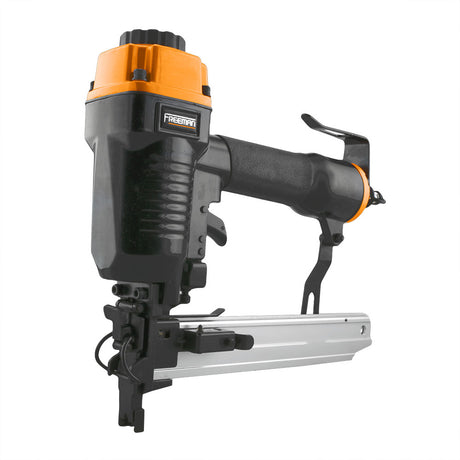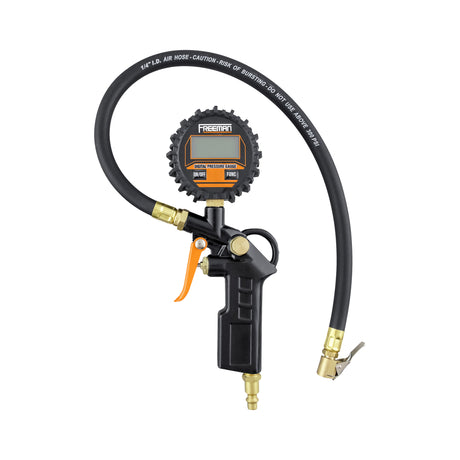

Setting your nail gun PSI isn’t a "set it and forget it" task. Dial it in correctly, and you get flawless, flush countersinks. Get it wrong, and you’re dealing with proud nails, split wood, or a damaged tool.
Here is everything you need to know about optimizing your compressor pressure for nailers to get perfect results every single time.
Recommended PSI Ranges by Nailer Type
Different fastening jobs require different levels of force. A heavy-duty framing nailer driving a 3½-inch clip-head nail into engineered lumber needs significantly more pressure than a micro-pin nailer securing delicate trim.
|
Nailer Type |
Recommended PSI Range |
Typical Application
|
|---|---|---|
|
Framing Nailer |
90 – 120 PSI |
House framing, fencing, deck sub-structures |
|
Roofing Nailer |
90 – 110 PSI |
Asphalt shingles, insulation board |
|
Finish Nailer (15/16 Gauge) |
70 – 100 PSI |
Door casings, baseboards, stair rails |
|
Brad Nailer (18 Gauge) |
70 – 90 PSI |
Cabinetry, moulding, detailed trim work |
|
Pin Nailer (23 Gauge) |
60 – 90 PSI |
Delicate craftwork, thin veneers, bead moulding |
Pro Tip: Always check your specific tool’s operating manual. Running a tool completely outside its engineered limits voids warranties and accelerates wear.

Why Higher Isn't Always Better (The Myth of Max PSI)
It’s a common temptation: crank the regulator up to 120 PSI to ensure every nail sinks deep. However, over-pressurizing your nail gun is counterproductive for several reasons:
-
Material Damage: Excessive pressure blows right through softwoods, marring the surface or sinking the nail head too deep, which ruins the holding power of the fastener.
-
Tool Wear and Tear: High PSI forces the internal piston, driver blade, and bumper to absorb massive kinetic energy. This rapidly degrades O-rings and can chip the driver blade.
-
Recoil and Fatigue: Higher pressure equals sharper recoil, making it harder to maintain accuracy during rapid-fire placement.
The Golden Rule: Use the lowest possible PSI that consistently drives the nail flush with the material surface.
Air Compressor Sizing: CFM vs. PSI
While PSI (Pounds per Square Inch) measures the force of the air, CFM (Cubic Feet per Minute) measures the volume of air delivered. Think of PSI as the muscle and CFM as the stamina. Your compressor needs to match the pace of your work, which is where choosing the right power source and tank size comes into play.

The Ultimate Grab-and-Go Option: 1-Gallon Cordless
If you're running trim, brad nailers, or pin nailers, massive tanks are overkill. You want speed and mobility.
-
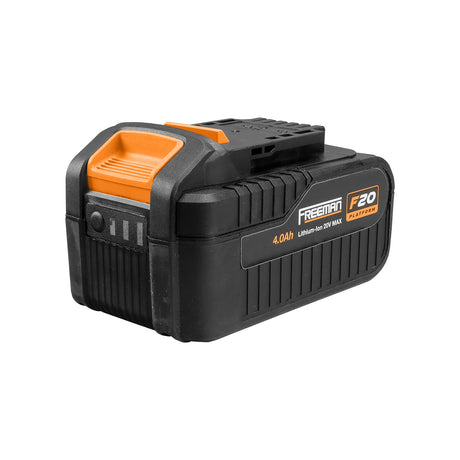
Product Spotlight: The PE20V1GCK 20V Cordless 1 Gallon Lightweight Air Compressor. This unit completely eliminates the hunt for an extension cord. It delivers the exact compressor pressure for nailers like finish and brad guns in a highly portable footprint, complete with the battery so you can get straight to work on punch lists or remote jobsites.

The Workshop Workhorse: 3-Gallon Electric
When you step up to continuous assembly work, flooring, or rapid-fire sequencing, a bit more air storage prevents the motor from cycling continuously.
-
Product Spotlight: The P3GCOMP Electric 3 Gallon Air Compressor. Giving you a larger volume buffer, this 3-gallon setup maintains rock-solid, consistent nail gun PSI during longer work sessions. It provides the perfect balance of portability and air storage for residential DIYers and light contractors alike.

The Pro Jobsite Powerhouse: 5-Gallon High-Pressure
When your workflow scales up to professional carpentry, framing, roofing, or running multiple finish nailers simultaneously, you need a high-recovery unit with serious capacity.
-
Product Spotlight: The Estwing E5GCOMP 5-Gallon Quiet High Pressure Oil-Free Compressor. Boasting an impressive 180 max PSI, this 5-gallon compressor packs 50% more usable air than standard 150 PSI models, providing longer tool runtimes and reduced cycling frequency. Powered by a durable, oil-free 4-pole electric motor (1.6 HP running / 2.5 HP peak), it delivers 3.8 SCFM @ 90 PSI to support multiple pneumatic tools at once. Operating at a whisper-quiet 68 dBA, it provides a serene workspace for enclosed or residential environments. It is equipped with a protective steel roll cage, low starting draw (10–15 amps) to prevent tripped breakers on long extension cords, dual oil-filled vibration-resistant gauges for precise accuracy, and dual brass universal quick couplers. Best of all, it features an extended maintenance-free life span of over 3,000 continuous hours and is backed by a 5-Year Limited Warranty.
Hose Considerations: Don’t Choke Your Tool
You can have the best compressor on the market, but if your hose setup is wrong, your nail gun will starve for air.
-
Diameter Matters: For small brad and finish nailers paired with a compact unit like the PE20V1GCK, a lightweight 1/4-inch hose is perfect and reduces user fatigue. For larger framing or flooring guns, step up to a 3/8-inch hose to ensure maximum volume reaches the tool instantly.
-
Length Restricts Flow: The longer the hose, the more pressure drops by the time the air reaches the gun (friction loss). If you are running 100 feet of hose off your P3GCOMP or E5GCOMP, you may need to set your compressor regulator 5–10 PSI higher than normal to compensate for the drop.
Troubleshooting Poor Performance
If your fasteners aren't driving correctly, don't automatically blame the nailer. Run through this quick checklist:
1. Nails are standing proud (under-driving)
-
Check the regulator: Did your compressor drop below the tool's minimum PSI?
-
Check for leaks: Listen along the hose line and at the quick-connect couplers.
-
Adjust the depth-of-drive: Many modern pneumatic nailers have a tool-free depth adjustment wheel near the nose. Adjust this before maxing out your compressor pressure.
2. Nails are blowing through the wood (over-driving)
-
Lower the PSI: Drop the regulator by 5–10 PSI increments.
-
Check material density: If you transitioned from a hard knot to soft clear wood, adjust your technique or depth settings accordingly.
3. The tool "bogs down" during rapid firing
-
CFM deficit: Your compressor tank is too small or the motor cannot cycle fast enough to maintain pressure during rapid-fire placement. Slow down your pace to let the recovery cycle finish, or step up from a 1-gallon to a high-capacity unit like the 3-gallon P3GCOMP or the heavy-duty 5-gallon Estwing E5GCOMP.
Bottom Line
Pneumatic tools offer an unmatched power-to-weight ratio that makes long workdays incredibly manageable. By matching your tool's specific PSI requirements to your compressor's output—whether you choose the cordless freedom of the PE20V1GCK, the steady capacity of the P3GCOMP, or the commercial-grade force of the Estwing E5GCOMP—you’ll ensure clean finishes, prolong the lifespan of your equipment, and maximize job site efficiency.