
Every contractor knows the distinct, energy-sapping sound of a hammer drill chewing through cured concrete. You measure, you drill a pilot hole, you blow out the abrasive dust, and finally, you drive a concrete screw home. Then you repeat the process hundreds of times.
This traditional "drill-and-anchor" method is a notorious jobsite bottleneck. It burns through expensive carbide drill bits, snaps fasteners, strains your shoulders, and drains your daily productivity.
But fastening to masonry doesn’t have to be a multi-minute chore per bracket or plate. With Freeman concrete nailers, you can replace that tedious sequence with a split-second shot. Transitioning to a specialized, single-step direct-fastening system allows you to maximize jobsite output, eliminate physical fatigue, and dramatically slash labor costs.
The Math of Speed: Why Direct Fastening Wins
When you look at the numbers, continuing to use the drill-and-anchor method for high-volume framing simply doesn't add up.
-
The Drill-and-Anchor Method: Averaging 1 to 2 minutes per fastening point when factoring in drilling, cleaning, and driving.
-
The Freeman Concrete Nailer Method: Less than 2 seconds per shot.
On a standard residential basement remodeling job requiring 150 fastening points along the bottom plates, switching to a concrete nail gun saves you hours of tedious labor on day one alone.
Structural Efficiency and Hold
Beyond sheer speed, direct fastening provides exceptional structural reliability. Shooting hardened T-nails or specialized single pins creates an immediate, high-shear mechanical bond between your material and the substrate. Because the fastener displaces concrete as it enters under high pressure, it locks tightly into place. This completely eliminates the risk of stripped screw threads or spinning anchors in brittle concrete block.
Primary Applications Checklist
Freeman concrete nailers are engineered to streamline a wide variety of demanding masonry tasks:
-
Basement & Room Remodeling: Anchoring pressure-treated wood $2\times4$ bottom plates directly to poured concrete floor slabs.
-
Commercial Drywalling: Fastening heavy-gauge metal tracks to concrete overhead ceilings and structural floors.
-
Exterior Modernization: Securing wood furring strips to concrete block walls before installing siding or rigid foam insulation.
-
Wire Lathing & Stucco: Quickly pinning metal mesh to masonry foundations before mudding.
Product Showdown: 3 Freeman Concrete Nailers
To optimize your workflow, you need to match your tool to the specific scale and environment of your daily applications. Here is how Freeman’s specialized lineup delivers the power and efficiency you need.

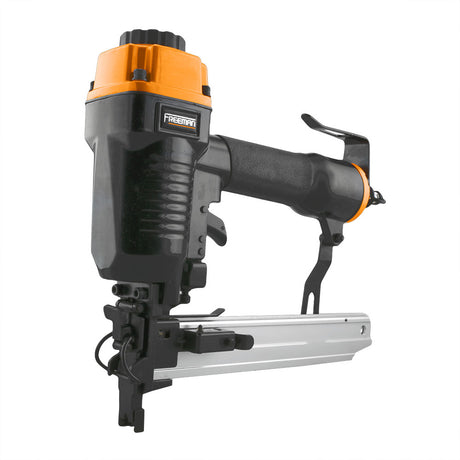
Pneumatic 14-Gauge 2-1/2" Heavy Duty Concrete T-Nailer (PCTN64)
-
Application Focus: Ideal for high-volume, repetitive applications like installing furring strips, plywood subflooring, and light-gauge metal lathe to brick or concrete block.
-
Efficiency Factor: The high-capacity 100-nail magazine minimizes downtime spent reloading, allowing you to maintain incredible momentum across large surface areas.
-
Key Specs: Operates at 70–115 PSI; drives 14-gauge glue-collated T-nails from 5/8" to 2-1/2" (such as Freeman CTN14-15).

Pneumatic 3" Single Pin Concrete Nailer (G2SSCP)
-
Application Focus: Heavy-duty structural framing. This second-generation powerhouse is built specifically for driving thick $2\times$ framing lumber into dense, fully cured concrete slabs.
-
Efficiency Factor: Engineered with optimized internal airflow to deliver maximum driving power with drastically less air consumption. This reduces how often your jobsite compressor needs to cycle, saving electricity and speeding up cycle times between shots.
-
Key Specs: Fires heavy-duty single concrete pins from 3/4" up to 3" (compatible with Freeman CNDPN34). Features a rugged, lightweight magnesium housing designed to easily withstand harsh jobsite drops.

20V Cordless and Brushless 3" Single Pin Concrete Nailer (PE20VCNPN)
-
Application Focus: Remodeling punch lists, overhead commercial track installation, and tight residential crawlspaces where space and power access are limited.
-
Efficiency Factor: Peak jobsite mobility. This cordless concrete nailer completely eliminates the time spent unpacking, untangling, and rolling up heavy air hoses and loud compressors, saving you critical setup and teardown time.
-
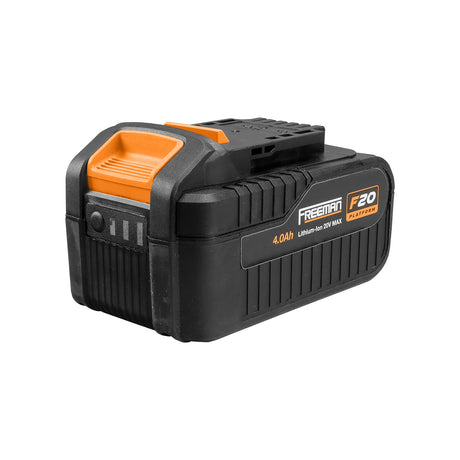
Key Specs: Powered by a high-capacity 20V 4.0 Ah lithium-ion battery; fires up to 750 single pins per charge using a highly efficient, long-lasting brushless motor. (Compatible with Freeman CNDPN34)
Buying Guide: How to Choose Which One You Need
Choosing the right pneumatic concrete nailer or cordless option depends entirely on your primary tasks. Use this quick-reference guide to select the best tool for your workflow:
|
If Your Primary Job Is... |
Your Top Priority Is... |
The Best Tool Choice Is... |
|
Furring strips, wood trim to brick, or wire lathing |
High volume, continuous fastening |
PCTN64 (14-Gauge T-Nailer) |
|
Heavy basement framing & structural $2\times4$ plates |
Maximum driving depth & penetration power |
G2SSCP (3" Pneumatic Single Pin) |
|
Overhead track, multi-room punch lists, or mobile repairs |
Rapid setup, zero hoses, and tight-space agility |
PE20VCNPN (20V Cordless Single Pin) |
Upgrade Your Workflow
Fastening wood to concrete doesn’t have to mean ruined bits, clouds of silica dust, and sore hands. Upgrading to a specialized Freeman concrete nailer pays for itself in sheer time saved on your very first project.
Explore the complete line of rugged, high-efficiency concrete tools and fasteners at FreemanTools.com