
Ever wonder why that bargain-bin nailer feels like an absolute brick after three hours on the job, while a pro-grade pneumatic tool just keeps purring?
It’s easy to look at two tools on a shelf and think, "Hey, they both shoot nails and run on air. Why pay the premium?" But just like a supercar and a commuter hatchback, the real magic happens under the hood.
We’re cracking open the casing for a deep-dive anatomy lesson. If you’ve ever wanted to know why professional pneumatic tools bridge the gap between DIY affordability and punishing jobsite durability, this is your backstage pass.

1. The Skeletal System: Lightweight Magnesium Housings
When you’re working overhead all day, every single ounce feels like a pound by 3:00 PM. This is where the tool's housing—its "skin and bones"—makes or breaks your stamina.
-
The DIY Standard: Cheaper tools often use heavy aluminum or, worse, dense plastics that crack under pressure.
-
The Pro-Grade Upgrade: Magnesium bodies. Magnesium boasts an incredible strength-to-weight ratio. It's roughly 33% lighter than aluminum but doesn't sacrifice an ounce of durability.
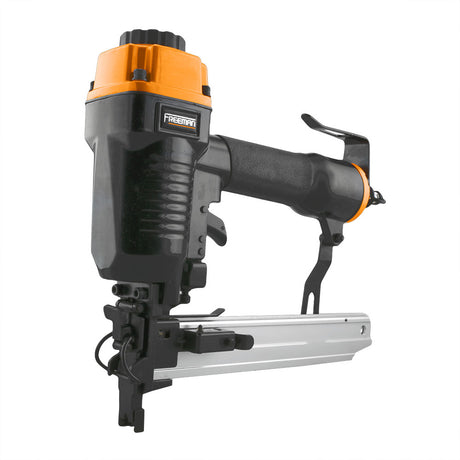
Take a look at the blueprint of a powerhouse like the Freeman PFR2190 21-Degree Framing Nailer. By utilizing a high-strength magnesium housing, it absorbs jobsite drops and drastically reduces user fatigue, keeping you fresh for the long haul.

2. The Muscular System: One-Piece Hardened Steel Drive Blades
The drive blade is the hammer of your pneumatic tool. Every time you pull the trigger, compressed air slams this component down to seat a fastener.
The DIY Pitfall: Budget tools often use multi-piece drive blades or softer steel alloys. Under heavy use, the tip of the blade mushrooms, warps, or snaps right at the joint, turning your tool into an expensive paperweight.
Professional tools utilize a one-piece hardened steel drive blade. Machined from a single block of high-grade, heat-treated steel, there are no joints to fail. Whether you're firing into engineered lumber with a heavy-duty framing gun or doing delicate trim work with a Freeman G2CN65 Coil Siding Nailer, a single-piece blade strikes clean, stays sharp, and handles hundreds of thousands of cycles without missing a beat.
3. The Cardiovascular System: Oil-Free Teflon O-Rings
If air is the lifeblood of a pneumatic tool, the O-rings are the heart valves. They manage the pressure and seal the internal chambers.
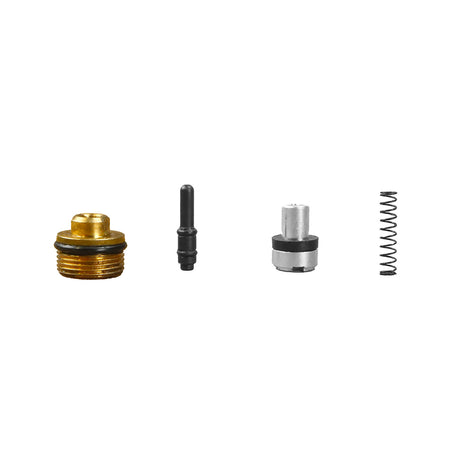
Professional-grade tools heavily rely on oil-free Teflon (PTFE) O-Rings. Teflon has an incredibly low coefficient of friction and massive temperature tolerance.
Because tools engineered this way don't require daily oiling to survive, you don't have to worry about oil mist spraying out of the exhaust and ruining pre-finished trim, delicate cedar siding, or pristine drywall.

4. The Respiratory System: Dual-Mode Triggers and Clean Exhaust
How a tool breathes and reacts tells you everything you need to know about its engineering. Professional tools are built with precision control and safety in mind.
-
Selectable Fire Modes: A pro-grade tool features a crisp, switchable trigger that lets you jump from sequential firing (precision placement) to bump firing (high-speed production) with the flip of a switch—no tools required.
-
No-Mar Pads & Anti-Dry-Fire: Premium build quality means protecting your work surface. Tools like the Freeman PFL618BR 3-in-1 Flooring Nailer or professional finish guns feature specialized no-mar tips to keep pristine wood completely dent-free, alongside anti-dry-fire locks that stop the tool from firing when empty to protect internal components.
The Verdict: Why Infrastructure Matters
It’s easy to optimize for the price tag when you’re looking at a tool on a screen. But on a busy jobsite, downtime is the ultimate budget killer.
By investing in professional-grade pneumatic anatomy—magnesium housings, one-piece steel blades, and Teflon seals—you aren't just buying a tool. You're buying insurance against project delays, hand fatigue, and premature tool failure. It’s the ultimate bridge between "getting the job done" and "dominating the trade."
Looking to upgrade your arsenal with jobsite-proven durability? Explore our full lineup of professional high-performance pneumatic tools and high-quality collated fasteners.